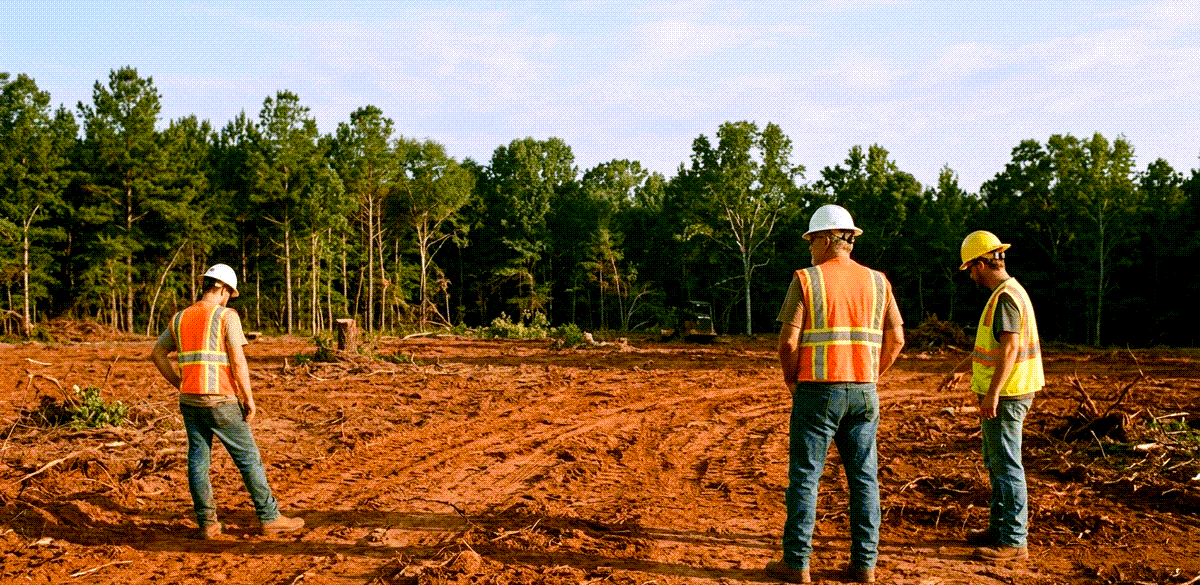
From Overgrown to Open — Land Clearing in Milledgeville, GA

Milledgeville Land Clearing is a land clearing company serving Milledgeville and Baldwin County Georgia with professional lot clearing, forestry mulching, brush removal, and full site preparation for new construction and rural land development. Whether you need lot clearing in Milledgeville for a new home, pasture reclamation, or rural property prep, we bring the right equipment for middle Georgia's red clay terrain.

7 Clearing Services
All Baldwin County
Free Site Quotes
Georgia EPD Compliant

Land Clearing Services in Milledgeville, GA

We offer 7 land clearing Baldwin County property owners rely on — from overgrown residential lot clearing Milledgeville homeowners need to forestry mulching Milledgeville landowners choose for faster, lower-cost results. From a half-acre lot buried in brush to a multi-acre rural tract that hasn't been touched in years, we have the equipment and middle Georgia experience to handle the full range of clearing and site prep work.

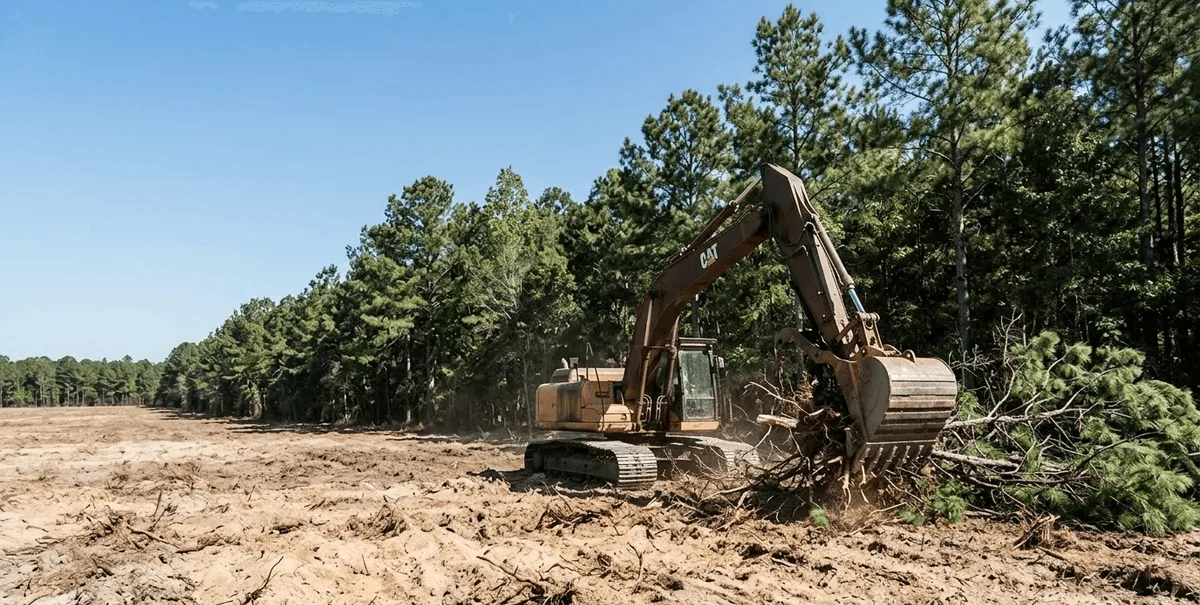
Heavy equipment clearing wooded land in Baldwin County GA

Land Clearing

Full property clearing using excavators, bulldozers, or forestry mulchers matched to your lot size and terrain. Baldwin County's red clay soil and dense pine understory require equipment selection by someone who knows middle Georgia conditions — not generic residential clearing contractors.

Learn More
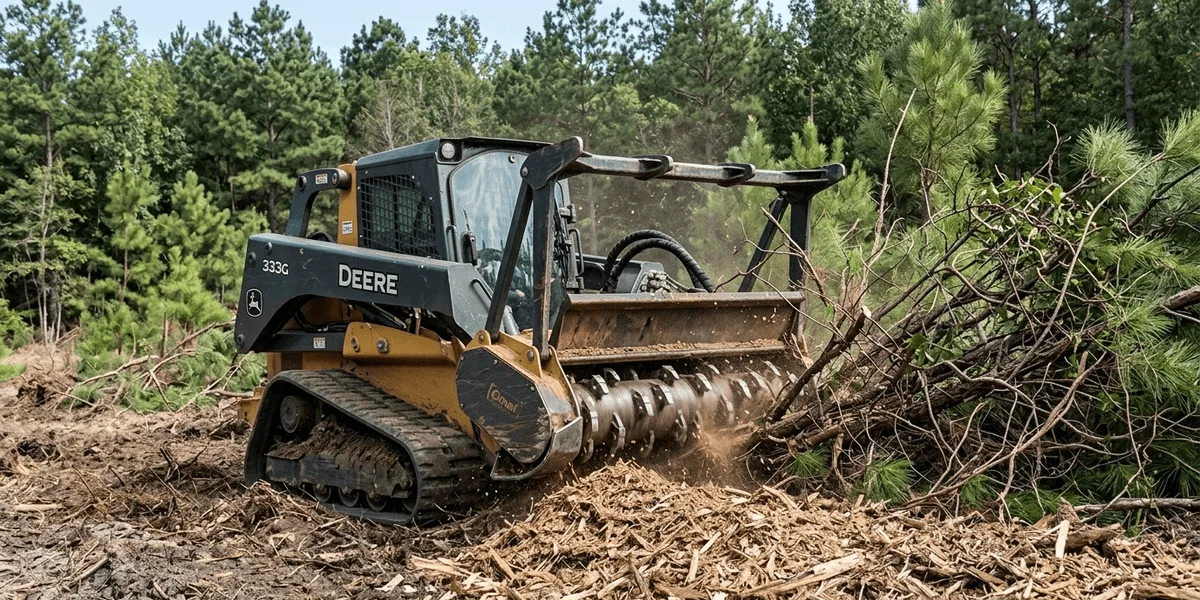
Forestry mulcher processing brush and trees on Georgia property

Forestry Mulching

Single-pass clearing that grinds trees and brush directly into mulch on-site — no haul-off required. Forestry mulching is the preferred method for Baldwin County lots where truck access is limited, protecting topsoil from erosion while reducing total project cost and timeline.

Learn More
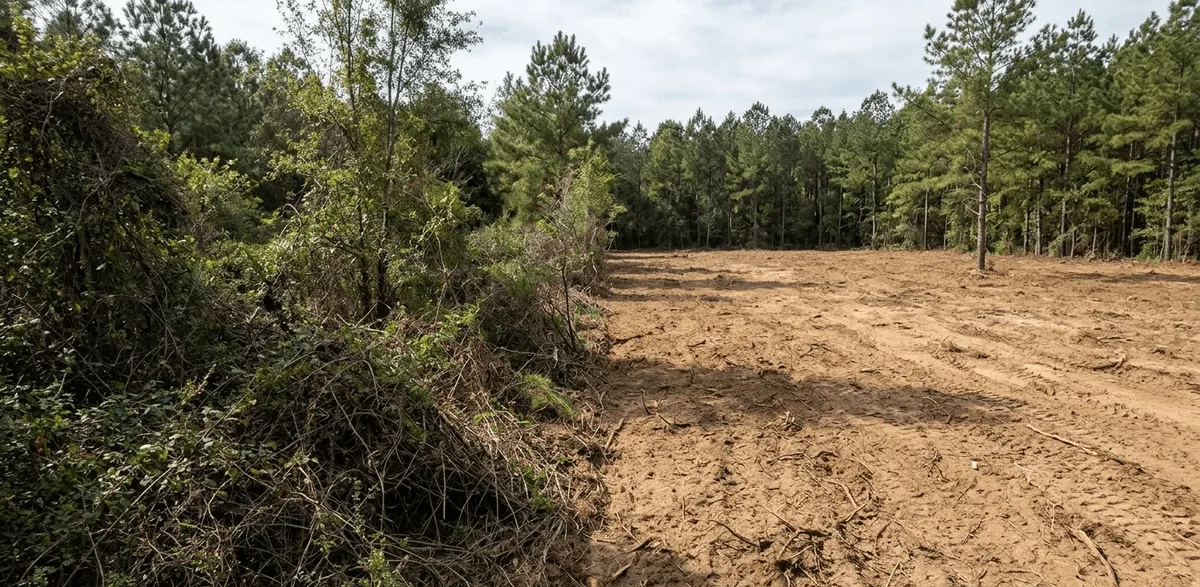
Overgrown brush being cleared from rural property

Brush Clearing

Removes overgrown briars, vines, scrub oak, and weed trees from residential and rural Baldwin County lots. Middle Georgia's warm climate and high humidity drive aggressive regrowth — thorough brush clearing eliminates the root systems, not just the top growth.

Learn More
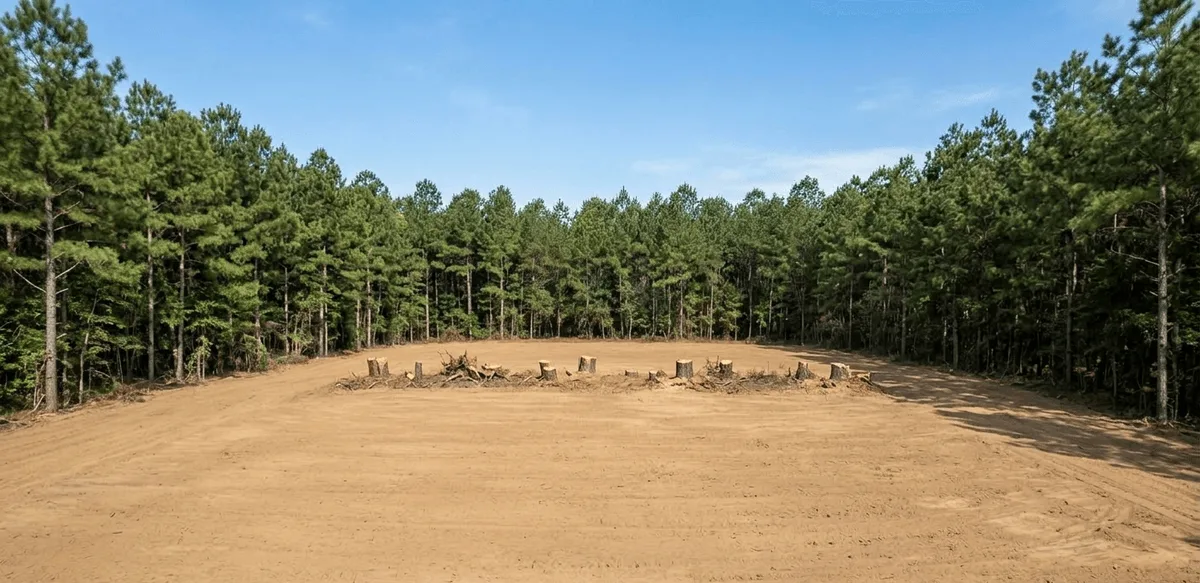
Residential lot cleared for new construction in Milledgeville area

Lot Clearing

Prepares residential lots for new home construction, mobile home placement, or property improvement across Baldwin County. Lot clearing for new construction must account for Georgia EPD setback requirements and stormwater rules — a critical consideration before permits are issued.

Learn More
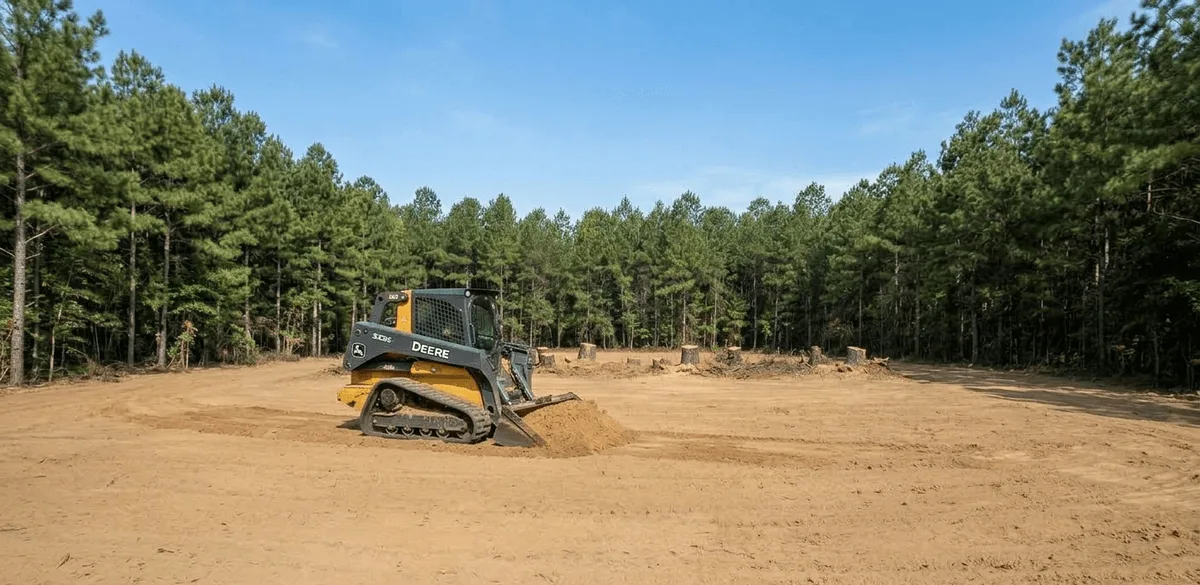
Site preparation and rough grading after land clearing

Site Preparation

Post-clearing site prep for construction — rough grading, compaction evaluation, and drainage correction before foundation work begins. Baldwin County's red clay soil has a high compaction risk after heavy equipment passes; proper site prep prevents costly foundation problems down the road.

Learn More
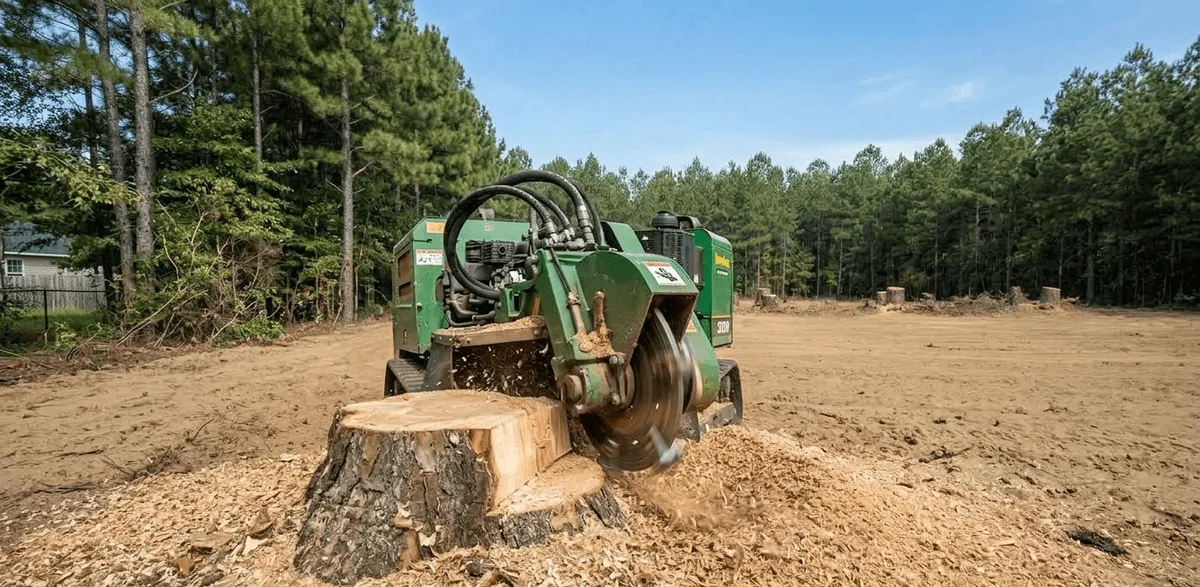
Stump grinding service on Baldwin County Georgia property

Stump Removal

Grinds stumps flush or below grade after tree removal or as a standalone service. Stumps left from prior timber harvests are common on Baldwin County rural properties and create hazards for mowing, building, and septic system installation — stump grinding resolves all of them.

Learn More
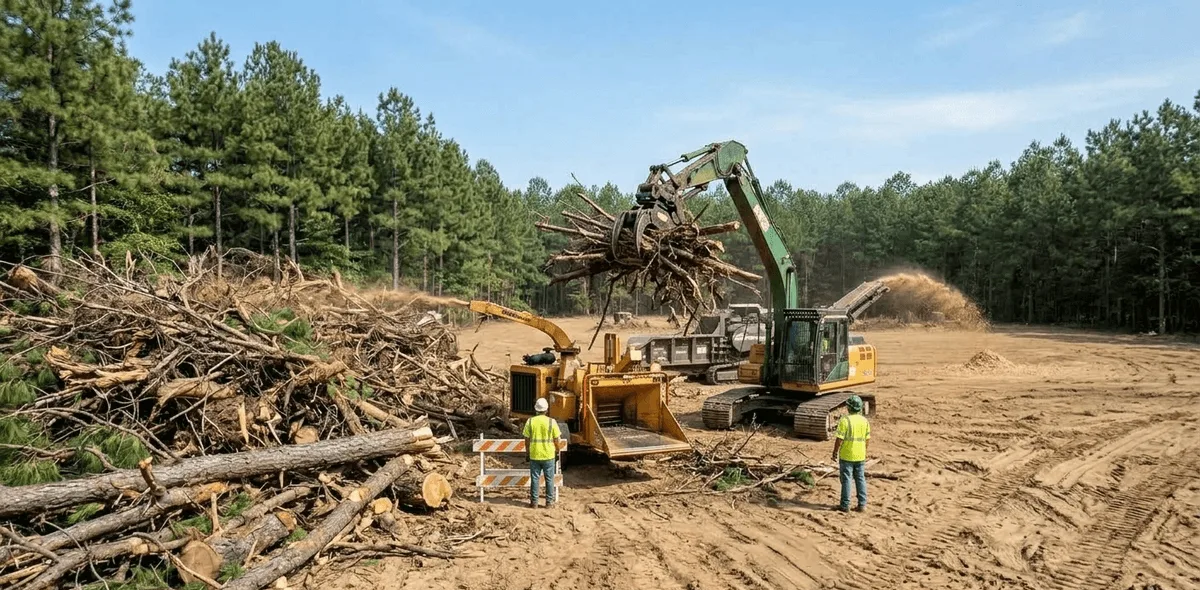
Debris hauled off after land clearing in Milledgeville GA

Debris Removal

Hauls or mulches cleared trees, brush, and vegetation — leaving your property clean and ready for its next use. Debris handling options include full haul-off, on-site mulching, or stacking for burning where allowed by Georgia Forestry Commission burn rules and Baldwin County ordinances.

Learn More

Why Choose Our Land Clearing in Milledgeville

Land clearing in Baldwin County is not a generic service — soil, terrain, and state permit requirements all factor into every job.

Georgia EPD Compliant

All land disturbance work follows state erosion and sediment control requirements. Projects over one acre require a Georgia EPD Land Disturbance Permit — we guide you through the process.

Free Property Assessments

We quote after seeing your property. Lot size, tree density, terrain, and soil access all affect cost — any estimate given without a site visit is a guess. We don't guess.

Forestry Mulching Available

For lots where hauling isn't practical, our mulching equipment processes vegetation in place — cleaner result, less truck traffic, less soil disturbance. Ideal for tight residential lots near Lake Sinclair and Lake Oconee.

Red Clay Ready

Baldwin County's red clay soil affects equipment selection, compaction risk, and drainage after clearing. We factor middle Georgia soil conditions into every quote and every method decision — not just acreage.

Why Land Clearing in Baldwin County Requires the Right Approach

Georgia Clay Demands the Right Equipment

Baldwin County's red clay compacts under heavy equipment — leading to drainage problems and uneven settling months later. Equipment selection and clearing timing both matter here.

Site Assessments Change the Numbers

Two Baldwin County lots with the same acreage can have very different clearing costs depending on terrain, canopy, and lake buffer setbacks. We assess first — quote second.

Forestry Mulching vs. Traditional Clearing

Mulching grinds trees and brush in place — no haul-off, less erosion risk, lower total cost. For most Baldwin County residential lots it's faster and cleaner than cut-and-haul.

Signs Your Milledgeville Property Needs Professional Land Clearing

  • Overgrown brush blocking a build area, driveway, or fence line
  • Stumps remaining from prior timber harvest or storm damage
  • Undergrowth has reclaimed a previously cleared lot
  • Building permit pending — lot still uncleared
  • Lakefront shoreline on Lake Sinclair or Lake Oconee overgrown

Clearing overgrown or wooded property in Baldwin County typically increases usable square footage, improves curb appeal, and raises assessed value — particularly for lakefront lots on Lake Sinclair and Lake Oconee where shoreline visibility and access are key value drivers. A cleared lot is also easier to finance and insure than heavily wooded parcels that obscure structural hazards or limit access for inspections.

The best time to clear land in Baldwin County is late fall through early spring — October through March — when vegetation is dormant, soil is firmer, and there is less risk of disturbing nesting wildlife. That said, professional clearing can be completed year-round with proper erosion controls; summer projects simply require more aggressive straw and silt fence management to satisfy Georgia EPD requirements during the wet season.

Milledgeville Land Clearing crew on a Baldwin County job site

Land Clearing Milledgeville GA — Serving Baldwin County and Surrounding Communities

As the trusted land clearing company serving Milledgeville and Baldwin County Georgia, Milledgeville Land Clearing handles projects throughout the county and all surrounding communities.

Baldwin County's rural character means land clearing often serves agricultural and outdoor recreation purposes beyond new construction — pasture reclamation for livestock, fence line clearing, food plot clearing for hunting leases, and pond site preparation are common requests throughout the county. Properties transitioning from timber to pasture, or rural tracts being cleared for hunting cabin access, benefit from the same professional equipment and site assessment process as residential lot clearing.

Milledgeville, GA Hardwick, GA Gordon, GA Toomsboro, GA Sandersville area Eatonton area Lake Sinclair area Lake Oconee area Rural Baldwin County

Not sure if your property is in our service area? Submit a free quote request — we'll confirm coverage and schedule a site visit.

Land Clearing FAQ — Baldwin County, Georgia

Answers to the most common questions about land clearing services, costs, permits, and methods in Milledgeville and Baldwin County.

How much does land clearing cost in Georgia?

In Baldwin County, Georgia, land clearing typically costs $1,500–$5,000 per acre depending on tree density, lot size, terrain, and whether stump removal is included. Light brush and overgrown grass runs $500–$1,500 per acre, while heavily wooded lots with large pine timber can reach $3,500–$6,000 or more per acre.

Forestry mulching — which grinds vegetation in place — generally runs $150–$400 per hour or $1,000–$3,500 per acre depending on growth density. The most accurate way to get pricing for your Milledgeville property is to request a free site assessment — terrain and access vary widely across Baldwin County.

What is included in land clearing services?

Standard land clearing in Baldwin County includes the cutting and removal of trees, brush, undergrowth, and surface vegetation from the designated area. Depending on scope and your preferences, services may also include stump grinding, debris haul-off or on-site mulching, rough grading, and final site cleanup.

Forestry mulching, if selected, processes trees and brush into ground cover in a single pass — reducing hauling costs and protecting Baldwin County's red clay topsoil from erosion. Always confirm what is included in writing before clearing begins.

Do I need a permit to clear land in Georgia?

In Baldwin County, Georgia, a Land Disturbance Permit (LDP) is required for any clearing activity that disturbs one or more acres. This permit is administered by the Georgia EPD and enforces erosion and sediment control standards under the NPDES stormwater program. Smaller residential clearing under one acre may not require a state permit, but local Baldwin County zoning rules may apply.

If your project is near a stream buffer, wetland, or the shoreline of Lake Sinclair or Lake Oconee, additional EPD review is likely required. We can help guide you through permit questions during the initial site assessment.

Does land clearing include stump removal?

Stump removal is typically an add-on service rather than a standard inclusion in land clearing. When trees are cut and removed, stumps are generally left at grade unless stump grinding is specifically requested and included in the scope. Stump grinding in Baldwin County costs $75–$150 per stump depending on diameter.

Forestry mulching is an exception — the mulching head grinds stumps and root systems in the same pass as the brush, effectively including stump treatment in the overall service at no separate charge.

How long does it take to clear an acre of land?

In Baldwin County, Georgia, clearing one acre typically takes between half a day and two full days depending on tree density, terrain slope, and clearing method. Light brush on a flat residential lot can be cleared in a few hours. A heavily wooded Baldwin County tract with large pine timber and dense undergrowth on uneven terrain may require a full crew for two days.

Forestry mulching generally processes land faster than traditional cut-and-haul because it eliminates the separate debris removal stage — all vegetation is ground in place during the same pass.

What is the best method for clearing wooded land?

The best clearing method for a Baldwin County property depends on tree density, your timeline, and your plans for the land. Forestry mulching is the most efficient option for lots with dense brush, small-to-medium diameter trees, and limited truck access — the machine grinds everything in a single pass, leaving mulch on the soil surface.

Traditional cut-and-haul clearing using excavators or bulldozers is better for heavily wooded tracts where large timber must be removed or when a completely clean graded surface is required for immediate construction. A site visit determines the right equipment for your specific Baldwin County parcel.

What is forestry mulching and how does it work?

Forestry mulching uses a skid steer or tracked machine with a drum-style mulching head to cut, grind, and process trees, brush, and undergrowth into mulch in a single pass. Unlike traditional clearing, there is no separate haul-off stage — all vegetation is ground in place and left as a protective layer that reduces soil erosion and retains moisture.

Forestry mulching is well-suited to Baldwin County's middle Georgia terrain and is a cost-effective option for properties where hauling debris out is impractical, or where preserving topsoil and minimizing erosion is a priority near lake buffers or stream setbacks.

Can land clearing cause soil erosion?

In Baldwin County, Georgia, land clearing can cause significant soil erosion if not managed correctly. Baldwin County's red clay soil loses its structure rapidly when exposed to Georgia's heavy summer rains — bare slopes near Lake Sinclair and Lake Oconee can shed topsoil into the water within a single storm cycle if no erosion controls are in place.

Georgia EPD requires erosion and sediment control plans for clearing projects over one acre. Best practices include installing silt fences along downslope boundaries, maintaining vegetative buffers near water features, and scheduling clearing during drier months when possible. Forestry mulching reduces erosion risk by leaving a protective mulch layer on the soil surface.

How much does forestry mulching cost per acre?

Forestry mulching in Baldwin County typically costs $1,000–$3,500 per acre or $150–$400 per hour depending on vegetation density, tree diameter, terrain, and equipment access. Lighter brush and scrub growth falls toward the lower end; dense lots with mid-size pine trees in red clay soil run higher due to equipment stress and slower processing speeds.

Despite sometimes higher per-acre rates compared to simple brush clearing, forestry mulching often produces lower total project costs by eliminating the haul-off stage, reducing equipment mobilization trips, and completing the job faster. It also leaves the site in better condition for erosion control and future use.

What equipment is used for land clearing?

In Baldwin County, Georgia, professional land clearing uses equipment matched to the job's scale and terrain. Common equipment includes:

  • Forestry mulchers (tracked or skid steer with drum head)
  • Excavators with grapple or brush-cutting attachments
  • Bulldozers for pushing large timber on multi-acre tracts
  • Mini excavators for tight residential lots with limited access

Baldwin County's red clay soil and uneven terrain near the reservoir shorelines require equipment with appropriate ground pressure — using the wrong machine leads to compaction damage that affects drainage and future construction. Equipment selection is one of the most important decisions made during the site assessment.

When is the best time to clear land in Georgia?

Late fall through early spring — roughly October through March — is the best time to clear land in Baldwin County. Vegetation is dormant, the ground is typically firmer, and there is less risk of disturbing active wildlife nesting. Georgia's summer growing season drives aggressive regrowth in cleared areas, so clearing during dormancy reduces the re-clearing timeline.

Clearing before the spring wet season also gives disturbed Baldwin County soil time to stabilize with erosion controls before summer thunderstorms arrive. That said, professional land clearing can be performed year-round with proper site management and erosion precautions.

Does clearing land increase property value?

In Baldwin County, Georgia, clearing land generally increases its market value and usability — particularly for rural parcels and lakefront properties near Lake Sinclair and Lake Oconee. Cleared land is easier to assess, develop, and sell; buyers can evaluate the full extent of the parcel, drainage patterns, and building site options without overgrowth obscuring the terrain.

For development-ready lots, clearing can significantly increase appraised value by making the property eligible for construction permits. Agricultural and hunting land that has been cleared for food plots, pasture, or timber management also commands higher prices among rural buyers in middle Georgia.

How do I clear heavily wooded land?

Clearing heavily wooded land in Baldwin County requires professional heavy equipment — excavators, bulldozers, or forestry mulchers selected based on timber size, density, and terrain. Attempting to clear wooded land without proper machinery produces incomplete removal, compaction damage from improper equipment, and failure to meet Georgia EPD erosion control requirements on larger projects.

A professional clearing contractor will assess tree species, diameter, access routes, soil conditions, and proximity to protected buffers before selecting equipment. These decisions are especially important on Baldwin County properties where red clay and seasonal wet conditions can quickly turn a clearing project into a site restoration problem if managed incorrectly.

What is the difference between land clearing and grubbing?

In Baldwin County, Georgia, land clearing removes above-ground trees, brush, and vegetation. Grubbing is the follow-on process that removes root systems, stumps, and subsurface organic material from the cleared soil. Clearing and grubbing together produce a fully prepared surface ready for construction, grading, or foundation work.

Not every clearing project requires full grubbing — forestry mulching grinds surface vegetation and shallow roots in place without complete subsurface removal, which works for many Baldwin County applications. Full grubbing adds cost but is required when a compaction-ready sub-base is needed for Georgia building permits and structural foundations.

Can I clear land myself without equipment?

Minor brush clearing on a very small lot can sometimes be handled manually with hand tools and a chainsaw for light overgrowth. However, any Baldwin County property with significant tree cover, dense root systems, or uneven terrain requires professional equipment to clear safely, completely, and in compliance with Georgia EPD erosion control rules.

For most Baldwin County property owners planning to build, farm, or develop, professional clearing is the practical choice — it is faster, thorough, and accounts for Georgia permit requirements and soil conditions that affect long-term site performance. DIY clearing on larger lots often results in incomplete removal and expensive remediation later.

How much does it cost to clear a lot for a house?

In Baldwin County, Georgia, clearing a residential lot for a house typically costs $2,000–$8,000 depending on lot size, tree density, and whether stump removal and rough grading are included. A half-acre wooded lot in the Milledgeville area with moderate tree density runs $1,500–$4,000 for clearing alone. Adding stump grinding and basic site prep for a foundation can push costs to $5,000–$10,000 on densely wooded parcels.

Getting a free site quote before purchasing land is strongly recommended — terrain, access, and tree density vary significantly across Baldwin County, and the same listed acreage can produce very different clearing costs depending on what is on the ground.

What happens to trees and debris after land clearing?

Cleared trees and debris are handled based on your property's needs and applicable Baldwin County ordinances. Options include contractor haul-off, forestry mulching in place (leaving a ground cover of processed wood chips), on-site chipping for mulch use, or stacking debris for burning when permitted.

Burning cleared debris in Baldwin County requires checking current Georgia Forestry Commission fire status and obtaining required burn permits. Burning is generally not permitted within Milledgeville city limits. Most residential lot clearing uses haul-off or forestry mulching since burning requires additional permits and is subject to weather and fire danger restrictions.

Is burning cleared debris legal in Georgia?

In Baldwin County, Georgia, burning cleared debris is legal under specific conditions. Georgia law permits open burning of natural vegetation (trees, brush, limbs) on the property where it was generated, but a burn permit from the Georgia Forestry Commission is required during fire danger periods and in designated counties. Local fire ordinances may add restrictions, and burning is generally prohibited within Milledgeville city limits.

Before burning cleared debris on your Baldwin County property, confirm current fire danger conditions with the Georgia Forestry Commission, check local ordinances, and obtain any required permits. Violations carry fines, and burns during high-danger periods can spread rapidly in Georgia's dry winter and spring conditions.

How do I prepare land for construction after clearing?

Preparing land for construction after clearing involves stump and root removal (grubbing), rough grading to establish correct slope and drainage, soil compaction testing, and erosion control installation before any foundation work begins. Georgia EPD requires an approved erosion and sediment control plan for larger projects in Baldwin County.

Baldwin County building permits typically require a site plan showing drainage patterns and grading before a foundation permit is issued. A land clearing contractor that also handles site preparation can coordinate these steps, keeping your project on schedule and avoiding costly delays in the local permitting process.

What should I ask a land clearing contractor before hiring?

In Baldwin County, Georgia, key questions to ask before hiring a land clearing contractor include: Do you handle Georgia EPD Land Disturbance Permit guidance? What specific equipment will you use for this lot and why? Is stump removal included or a separate cost? How will debris be handled — haul-off, mulching, or stacking? Do you carry liability insurance and equipment coverage? Can you provide a written scope of work before the job begins?

Asking these questions upfront protects you from scope creep, unclear billing, and work that doesn't meet Georgia permit requirements. No call centers, no middlemen — a local contractor who can show up and assess your specific Baldwin County property before quoting is the right starting point.

What is the difference between forestry mulching and land clearing?

Land clearing is the broad term for removing trees, brush, and vegetation from a property using any method — excavators, bulldozers, chainsaws, or mulching machines. Forestry mulching is one specific method of land clearing that uses a single machine to cut, grind, and process vegetation into mulch on-site in a single pass, eliminating the need for separate debris hauling.

Traditional clearing separates the cutting and removal phases, which adds cost and time but produces a clean graded surface suited for immediate foundation work. Forestry mulching is generally faster and lower-cost for lots with moderate tree density, while cut-and-haul methods are better for heavily timbered acreage where construction requires a bare surface.

Do I need to clear land before drilling a well?

In Baldwin County, Georgia, drilling a water well typically requires clearing a path wide enough for the drill rig to access the site — usually 10 to 15 feet wide with no overhead obstructions. For heavily wooded rural properties, this means clearing an access corridor before the drilling crew can mobilize. Well drilling equipment is large and requires a firm, level pad near the drill site.

If your Baldwin County property needs both land clearing and a new water well, coordinating clearing first ensures the well drilling crew has the access they need without delays. Milledgeville Well Drilling serves the same Baldwin County communities and can coordinate scheduling with your clearing project.

Do I need to clear land before installing a septic system?

In Baldwin County, Georgia, septic system installation requires clearing the area designated for the tank and drain field before the septic contractor can begin excavation. Dense brush, roots, and trees over the drain field footprint must be removed — roots from nearby trees can damage drain lines over time, so most installers require a cleared buffer around the field perimeter.

For new construction on rural Baldwin County properties, land clearing typically precedes both septic and well installation, giving all contractors clear access without scheduling conflicts. Milledgeville GA Septic serves the same Baldwin County communities and coordinates with land clearing contractors on new construction projects.

Can you clear land for pasture, hunting, or agricultural use in Baldwin County?

Yes. In Baldwin County, Georgia, land clearing for agricultural and rural uses — pasture reclamation, fence line clearing, food plot clearing, hunting land access, and pond site preparation — is a significant part of our work alongside residential and construction clearing. Rural properties transitioning from overgrown timber to open pasture or hunting land require the same professional equipment as new construction sites: excavators, forestry mulchers, and bulldozers matched to tree size and terrain.

Agricultural clearing projects often involve additional considerations such as preserving perimeter tree lines, managing runoff into ponds or creek buffers, and meeting any applicable Georgia EPD requirements on larger tracts. We assess each property individually and provide a written quote after a free site visit.

Request a Free Land Clearing Quote

Tell us about your property and we'll schedule a free site visit. No estimates over the phone — we assess your Baldwin County lot before quoting.

By submitting this form you agree to our Privacy Policy. We do not sell or share your information.

Serving Milledgeville, Hardwick, Gordon, Toomsboro, and all of Baldwin County, Georgia