
Brush Clearing in Milledgeville, GA
Overgrown briars, invasive vines, or scrub oak taking over your property? We clear residential and rural lots — targeting root systems, not just top growth — so cleared areas stay clear longer in middle Georgia's aggressive growing climate. Free quote with a site visit.
Brush Clearing Milledgeville GA — Professional Overgrown Lot Clearing
This area faces some of the most challenging vegetation conditions in the Southeast. Warm temperatures, high annual rainfall, and long growing seasons produce relentless growth — particularly invasive species like kudzu, wisteria, and Chinese privet that can reclaim a cleared lot within a single summer if root systems are not properly addressed.
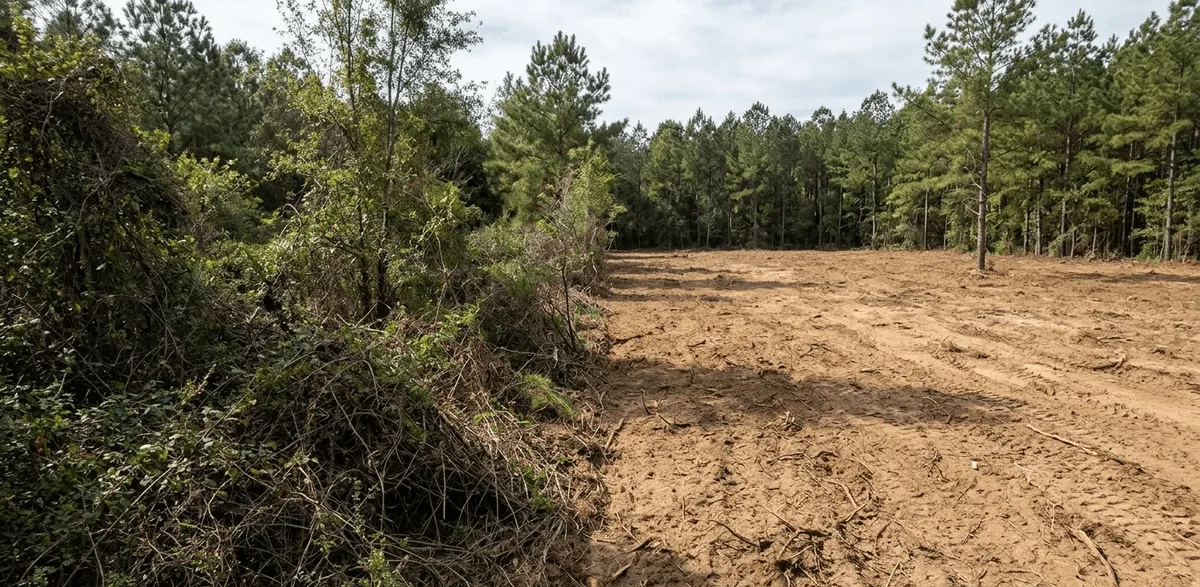
We provide professional brush clearing for residential lots, rural acreage, fence lines, right-of-way corridors, driveway access routes, and lakefront properties. We use equipment matched to the specific vegetation type — brush hogs for light overgrowth, skid steers with forestry mulching attachments for dense scrub and vine coverage, and hand equipment for selective clearing near structures or trees to be preserved. The goal is a thorough clear that removes root systems and addresses regrowth from the ground up — not just a cosmetic pass that leaves root systems intact to sprout back within weeks.
Types of Vegetation We Clear
Brush and vegetation clearing most commonly involves briars and blackberry canes, kudzu and wisteria vines, scrub oak and weed trees, dense understory that has accumulated under pine canopy, overgrown ornamental plants that have gone wild, and tall grass and sedge on neglected lots. On rural acreage and hunting land, we also handle underbrush removal and reclamation of food plots and pasture that have reverted to scrub.
Selective Brush Clearing
Not every brush clearing job is a full overgrown lot clearing. Many property owners want to clear the understory while preserving specific trees — mature hardwoods, lakefront trees that anchor the shoreline, or specimen trees near a house site. We perform selective underbrush removal around designated trees while leaving the tree canopy intact. Equipment and access planning both matter for this type of work — we assess your property to determine the right approach before clearing begins.
How much does brush clearing cost in Milledgeville, Georgia?
Brush clearing costs $500–$1,500 per acre for light to moderate overgrowth. Georgia's humid subtropical climate drives aggressive regrowth on Cecil series red clay soil, requiring root-system removal — not just surface cutting — to prevent rapid reestablishment. Properties near Lake Sinclair buffer zones may need additional Georgia EPD coordination before clearing begins.
Why Professional Brush Clearing Outperforms DIY
In middle Georgia's growing climate, half-measures produce fast regrowth and wasted money.
Root System Removal
Cutting brush at the surface leaves root systems intact and triggers aggressive regrowth from the roots within weeks. Professional clearing with the right equipment removes or damages root systems, significantly extending the time before regrowth returns.
Kudzu & Invasive Vine Control
Kudzu and wisteria are among the most persistent invasive plants in Baldwin County — capable of completely reclaiming a cleared area within one growing season if root systems are not addressed. We use methods that target vine root systems, not just surface coverage.
Selective Clearing Around Trees
Professional equipment and operator skill allow brush clearing that removes overgrowth while protecting trees you want to keep — access to a skid steer or forestry mulcher close to existing trees requires skill and experience that DIY clearing cannot replicate safely.
Erosion Control on Cleared Areas
Removing brush without addressing erosion risk on Baldwin County's red clay soil can create new problems. We consider post-clearing site conditions when selecting clearing methods — particularly on sloped terrain and lakefront properties.
Our Brush Clearing Process
Site Walk & Vegetation Assessment
We identify vegetation types, density, and root system depth on your Baldwin County property — specifically checking for invasive species, areas of dense vine coverage, and trees to be preserved before selecting clearing equipment and method.
Targeted Clearing
We clear using the method best suited to your vegetation — forestry mulching for dense brush and scrub, brush hogging for lighter overgrowth, or a combination approach for mixed-density areas. Selective clearing around preserved trees is marked and executed carefully.
Clean Property, Slower Regrowth
The cleared area is left with root systems addressed and debris handled per your preference — mulched in place or hauled off. A thorough professional clear produces significantly slower regrowth than surface-only cutting.
Brush Clearing — Cost Ranges
Actual cost depends on vegetation density, lot size, and the method required — a site visit gives the most accurate pricing for your specific property.
Light Overgrowth
$500–$1,200/acreTall grass, light scrub, and thin-stem brush on accessible, relatively flat terrain. Typical for recently neglected residential lots.
Moderate Brush & Vines
$1,200–$2,000/acreMixed brush, briars, and vine coverage with some woody scrub trees. Most residential and rural Baldwin County brush clearing projects fall in this range.
Dense Scrub & Invasives
$2,000–$3,500/acreHeavy kudzu or wisteria coverage, dense scrub oak thickets, or heavily wooded understory requiring forestry mulching equipment and multiple passes.
Get an Accurate Brush Clearing Quote
We assess your Baldwin County property before quoting — vegetation type and density vary widely and directly affect cost.
Request a Free Site QuoteBrush Clearing FAQ — Milledgeville & Baldwin County
How much does brush clearing cost in Baldwin County, Georgia?
Brush clearing typically costs $500–$2,000 per acre depending on vegetation type, density, and lot size. Light overgrowth on flat, accessible terrain runs toward the lower end. Dense briars, thick vine coverage, or woody scrub requiring multiple equipment passes runs higher.
A site visit is the only accurate way to price brush clearing on your specific property — what looks like light overgrowth from the road can hide significant root systems and vine coverage that affect both time and cost.
What is the difference between brush clearing and land clearing?
Brush clearing specifically targets understory vegetation — briars, vines, scrub oak, weed trees, and overgrown grass — without necessarily removing large trees or doing full-scale site preparation. It is commonly used to open up properties, maintain fence lines, reclaim pasture, or clear lakefront views while preserving the existing tree canopy.
Land clearing is a broader scope that typically includes tree removal, stump grinding, debris handling, and site preparation as a single project. Many property owners need brush clearing first and land clearing later — or only need brush clearing if large trees are not the issue.
Will brush grow back after clearing in Georgia?
Brush regrowth is essentially guaranteed without follow-up maintenance. Middle Georgia's warm climate, high annual rainfall, and long growing season produce some of the most aggressive vegetation regrowth in the Southeast. Kudzu, wisteria, and scrub oak sprout back quickly from root systems left in place after surface clearing.
Professional brush clearing that addresses root systems — particularly through forestry mulching, which grinds surface roots in place — significantly slows regrowth compared to mowing or chainsaw cutting alone. Annual or biannual maintenance clearing is typically recommended for rural properties and lakefront lots.
Can brush clearing be done on a wooded lot without removing trees?
Yes — selective brush clearing removes the understory while preserving specific trees. This is a common request on lakefront properties, rural acreage with mature hardwoods, and residential lots where existing trees add value and shade.
Equipment access and operator skill determine how close to preserved trees the clearing can be performed. We mark trees to be preserved during the site walk and select equipment that can work effectively in the available clearance.
What vegetation does brush clearing remove?
Brush clearing most commonly addresses briars and blackberry canes, kudzu and wisteria vines, Virginia creeper, scrub oak and weed trees, overgrown ornamental plants, tall grass, and dense pine understory.
On rural properties and hunting land, brush clearing is also used to reclaim food plots, restore pasture, and open timber stand access. The equipment and method used depends on what specific vegetation is present — we identify this during the site assessment.
How long does brush clearing take?
Brush clearing time depends on acreage, vegetation density, and terrain. A half-acre residential lot with moderate overgrowth can typically be cleared in a half day to a full day. Larger rural properties with dense vine coverage may require multiple days.
Forestry mulching handles brush clearing faster than manual or cut-and-haul methods because all vegetation is processed in a single pass — eliminating the loading and hauling stage. For very dense kudzu or wisteria infestations, a follow-up treatment may be needed several weeks after initial clearing to address regrowth from surviving root systems.
Request a Free Brush Clearing Quote
Ready to get started on your Baldwin County property? Submit a free quote request and we'll schedule a site visit — no estimates over the phone.
Free site visit included · Serving all of Baldwin County, Georgia
Serving Milledgeville, Hardwick, Gordon, Toomsboro, and all of Baldwin County, Georgia